Little Flexor Digitorum Superficialis Anatomy
Flexor Digitorum Sublimis (FDS)
- Origin: Humeral-ulnar head: Humerus (medial epicondyle via the common flexor tendon), ulnar collateral ligament (UCL) of the elbow joint, ulna (coronoid process, medial side), and intermuscular septa. Radial Head: Radius (oblique line on anterior surface).
- Insertion: Four tendons arranged in two pairs: Superficial pair: Long and ring fingers, and deep Pair: Index and little fingers with inserting into the appropriate middle phalanx.
- Innervation: Cervical root(s): C8–T1; Nerve: median nerve.
- In the proximal forearm the median nerve is on the dorsal surface of the FDS.
- The proximal flexor digitorum superficialis (FDS) has ulnar and radial heads.
- Proximally FDS muscle gets blood supply from the radial and ulnar arteries.
Diagrams & Photos
-
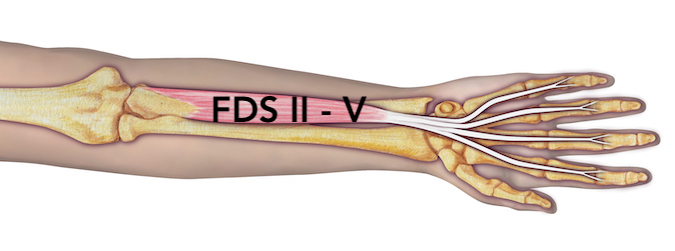 Flexor Digitorum Superficialis (FDS) II - V
 -
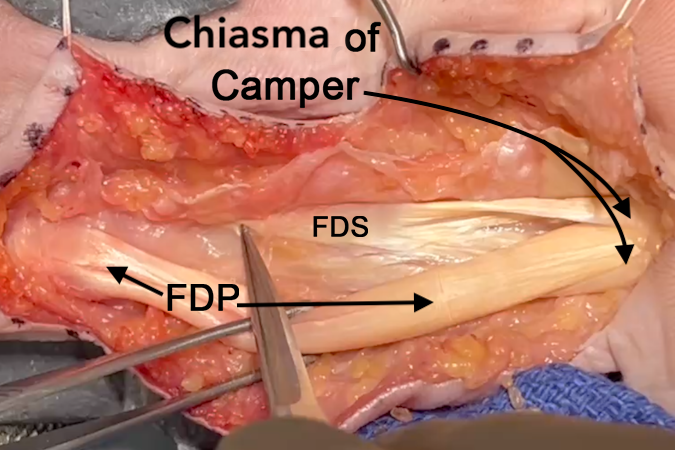 Palmar dissection at PIP joint level with flexion sheath removed. Note FDP and FDS tendons and the Chiasma of Camper.
 -
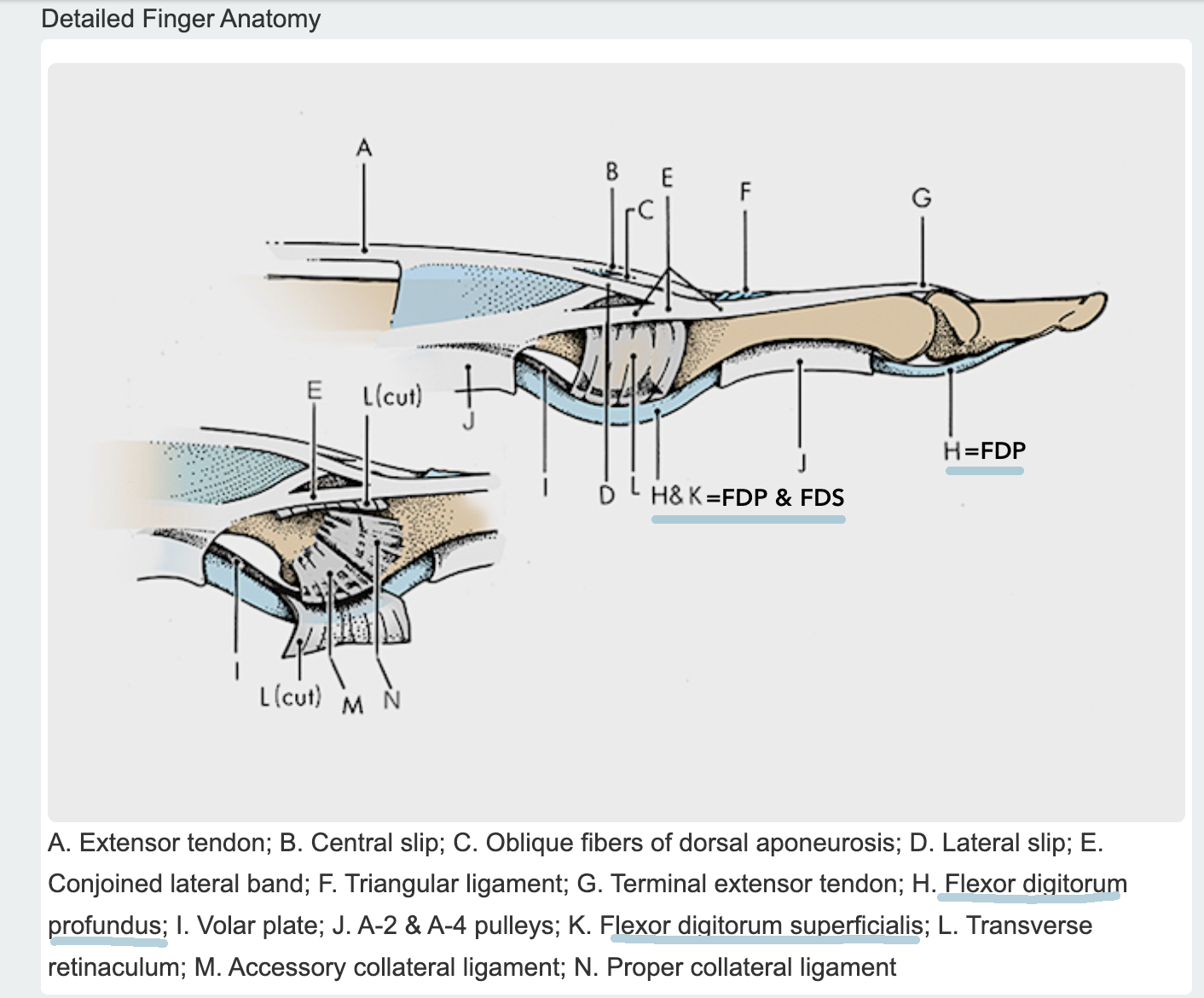 FDS
FDS
Key Points
- The vincula brevis goes from the neck of the proximal phalanx and its transverse vascular arch to the FDS tendon.
- At the Chiasma of Camper over the middle of the proximal phalanx the FDS splits into two slips which twist dorsally to reach their insertion sites at the base of the middle phalanx.
- At the PIP joint the two slips of the FDS rest on the volar plate. The short vinculum of the FDS originates from the vessels between the two parts of “check rein ligaments” of the proximal volar plate.